

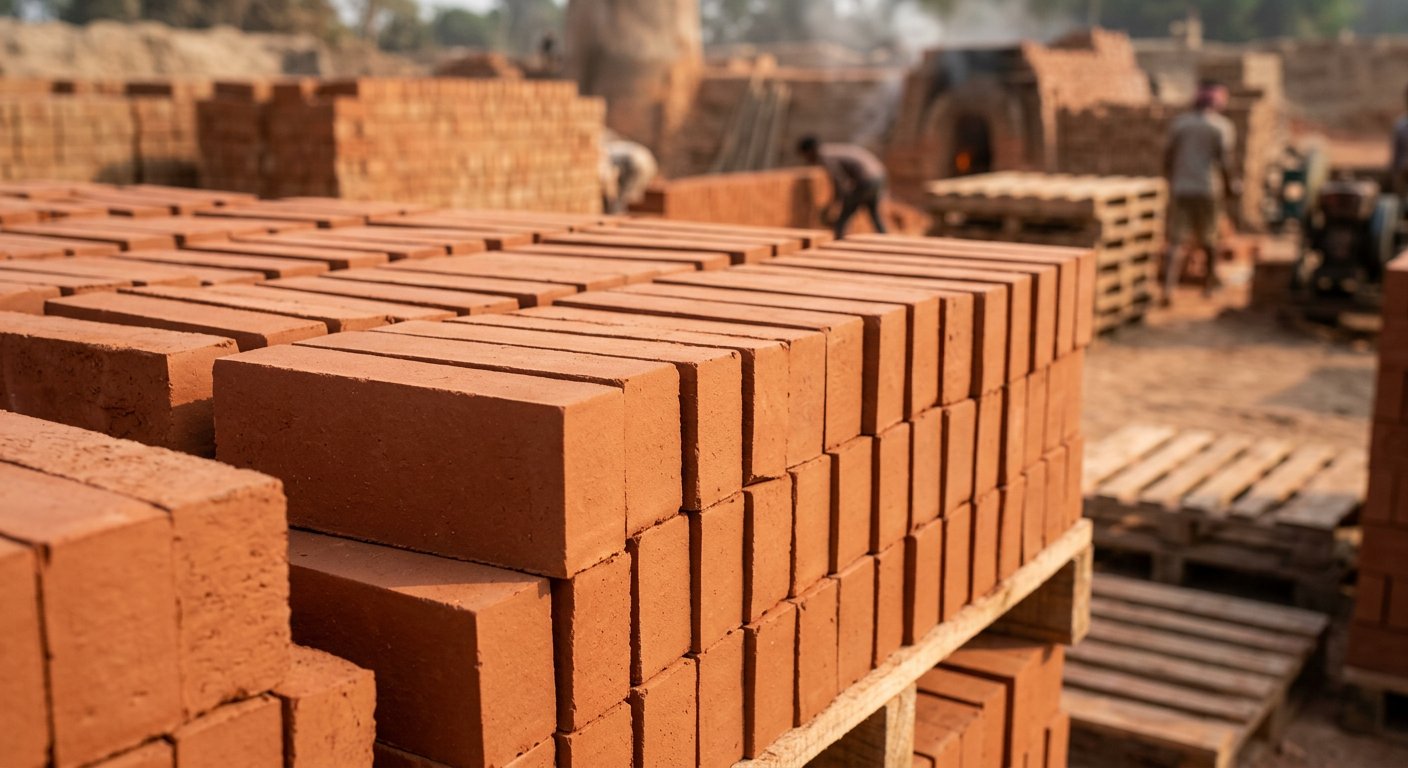
Clay brick manufacturing in India is an ancient trade continually refined by modern industrial chemistry. For brick kiln owners operating across varied soil terrains, understanding what clay brick chemical does is key to transforming inconsistent raw soil into durable, high-yield red clay bricks.
1. Defining Clay Brick Chemical in Practical Terms
A clay brick chemical is an industrial modifier introduced during the soil wetting and pugging stage. Its primary purpose is not to replace natural clay, but to optimize the physical and chemical interactions between clay platelets, silica particles, and water.
Raw clay minerals—such as illite, montmorillonite, and kaolinite—absorb water into inter-layer spaces. If water evaporates too rapidly during sun-drying, differential volume loss triggers internal tensile stresses that rip unbaked bricks apart. A clay brick chemical aids in maintaining balanced capillary pathways and particle cohesion.
2. Common Pain Points Solved at the Brick Kiln
- Excessive Drying Shrinkage: Highly plastic clays shrink dramatically under hot sun, causing spider-web surface fissures.
- Soft Edge Crumbling: Unbaked bricks with low green cohesion lose corners during wheelbarrow transportation to the kiln setting.
- Lime Nodule Disruptions (चुनखड़): Calcium deposits expand during moisture absorption post-firing, creating unsightly lime pops.
3. Safe Burn Chemicals 27 KG — The Complete Modifier
Formulated specifically for Indian brick kiln realities, Safe Burn Chemicals 27 KG (₹4,950) provides an accessible, standardized clay modifier solution. By supporting workability and drying stability, it helps brickmakers improve the proportion of first-class (No. 1) bricks pulled from the kiln.