

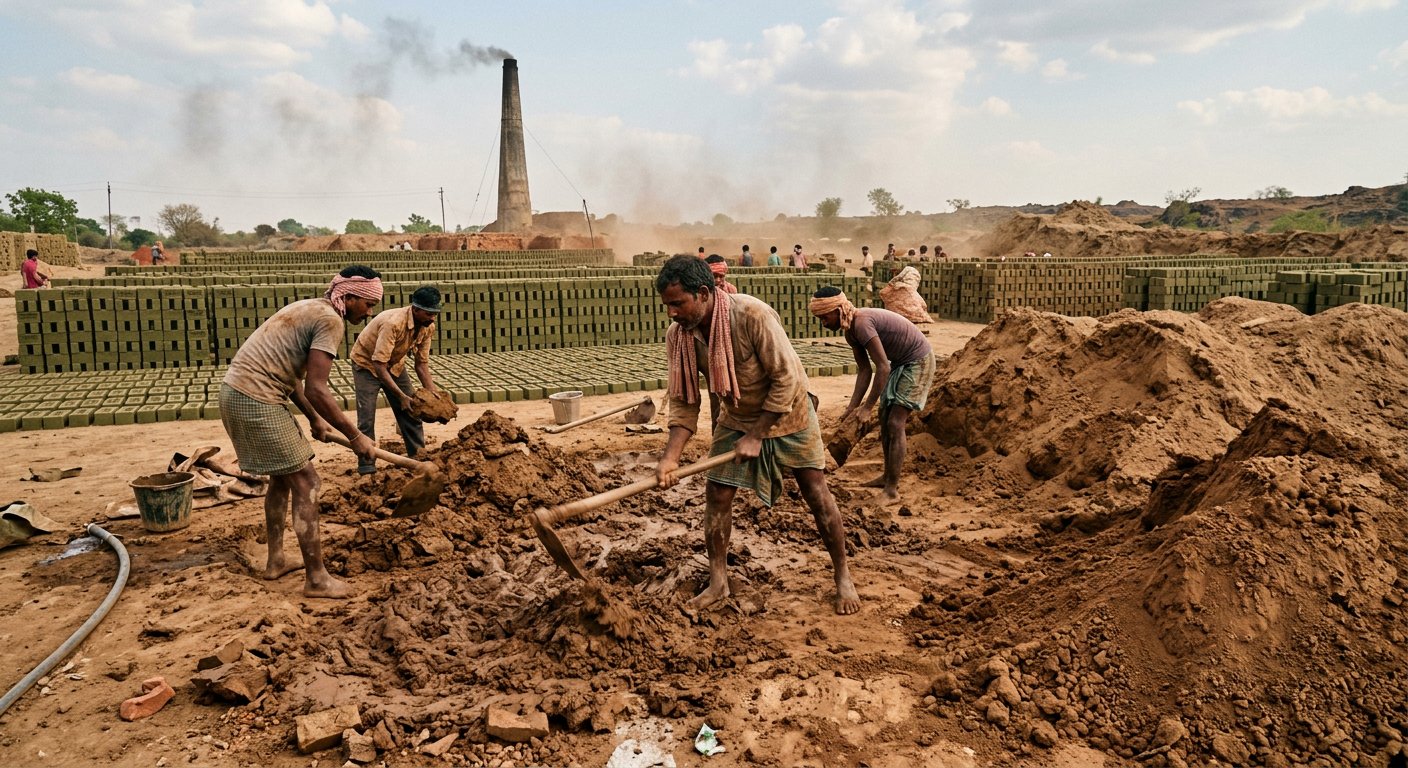
Across India’s brick manufacturing heartlands, no two clay quarries are identical. Some kiln operators face heavy black cotton earth that warps during drying; others contend with sandy loam that produces fragile green bricks. A clay modifier provides the solution.
1. The Physics of Soil Modification
A clay modifier is engineered to condition clay plasticity—the ability of wet soil to be deformed into a brick shape and retain that shape without slumping or cracking. By conditioning the electric charges on clay mineral surfaces, modifiers improve paste workability and reduce the quantity of excess water needed for smooth molding.
2. Direct Operational Benefits in Kiln Yards
When clay is correctly modified, molders experience cleaner release from wooden or metallic molds. Green bricks stand up with true right-angled arrises. As moisture leaves the body in open-air drying hacks, internal moisture migrates evenly, helping prevent warped faces and edge fractures.
Safeburn Chemical’s 27 KG heavy-duty container at ₹4,950 provides kiln operators with a reliable, factory-sealed solution ready for onsite application.